

India’s Wholesale Inflation Hits Record 11.39% in September 2026 as Food and Fuel Prices Surge
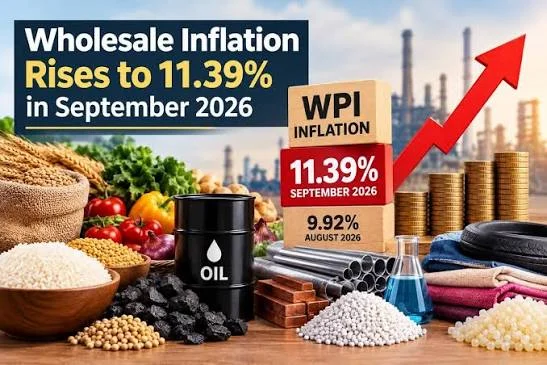
India’s wholesale inflation climbed to a record 11.39% in September 2026, driven by rising prices across food, fuel, power and manufactured goods. Government data released on Wednesday showed that inflation based on the Wholesale Price Index (WPI) increased from 9.92% in August, signalling growing cost pressures across the economy.
The latest figures point to a broad-based rise in input costs for businesses, with elevated international energy and metal prices adding to domestic food inflation. Economists expect wholesale price pressures to remain high in the coming months if global commodity prices continue to rise.
Wholesale Price Inflation Rises to 11.39% in September
India’s WPI inflation accelerated by 1.47 percentage points in September, reaching its highest level in the reported series. The increase reflected rising prices across major categories, including food articles, manufactured products, and fuel and power.
The continued rise in wholesale prices is a concern for businesses because higher production and transportation costs can affect profit margins, working-capital needs and investment plans.
Although wholesale inflation does not directly translate into an equivalent increase in retail prices, sustained cost pressures can eventually influence the prices consumers pay for goods and services.
Food Inflation Reaches an Eight-Month? High in September
Food prices were among the key contributors to the increase in wholesale inflation. Inflation in the WPI food index rose to 8.66% in September, compared with 7.05% in August.
According to ICRA Principal Economist Rahul Agrawal, wholesale food inflation reached a 23-month high during September 2026. The increase was supported by stronger price pressures across cereals, pulses, fruits and vegetables.
Rising food costs can affect households as well as businesses that rely on agricultural commodities as production inputs. If these increases persist, they could add to broader inflationary pressures and complicate the outlook for price stability.
Fuel and Power Inflation Climbs to 25.85%
The fuel and power category recorded a substantial increase in inflation during September. WPI inflation in this basket rose to 25.85%, up from 22.93% in August.
Elevated international energy prices have contributed to higher costs across the supply chain. Energy prices influence transportation, manufacturing, electricity generation and several other economic activities, making them an important driver of overall production costs.
The ongoing conflict in West Asia and disruption risks around the Strait of Hormuz have added uncertainty to global energy markets. Higher crude oil and fertiliser costs can also feed into other commodity prices, including those linked to food production and distribution.
Manufacturing Inflation Reaches 9.76%
Inflation in manufactured products also increased significantly, reaching 9.76% in September compared with 8.37% in August.
The rise suggests that cost pressures are extending beyond food and energy into the manufacturing sector. When businesses face higher prices for raw materials, fuel and other inputs, they may need to absorb the additional expenses or pass some of them on to customers.
Barclays also highlighted an increase in output producer price inflation. The output Producer Price Index (PPI) rose to 11.4% year-on-year in September from 9.8% in August, with manufacturing and mining prices contributing to the increase.
The simultaneous rise in wholesale and producer prices indicates that inflationary pressures are affecting several stages of production.
West Asia Conflict Adds to Global Commodity Price Pressures
Global energy and metal prices remain important factors shaping India’s inflation outlook. The conflict in West Asia and disruption risks affecting the Strait of Hormuz have raised concerns about the availability and cost of key commodities.
Higher crude oil prices can increase transport and manufacturing expenses, while rising fertiliser costs can add pressure to agricultural production. These effects can spread through supply chains and contribute to higher prices for a wider range of goods.
In a research note, Barclays warned that elevated international energy and metal prices could push wholesale and producer price inflation higher in the coming months.
The outlook will depend partly on how global commodity markets evolve and whether the current pressures persist.
WPI Inflation Could Reach 12% in October, ICRA Says
ICRA expects India’s wholesale inflation to increase further to around 12% in October 2026. The projection reflects continued pressure from global commodity prices, rising food costs and an unfavourable base effect.
According to Rahul Agrawal, wholesale inflation could remain in double digits through the third quarter of the financial year 2026–27 if these conditions continue.
A prolonged period of elevated wholesale inflation could affect business planning, particularly for companies with high energy consumption or significant exposure to commodity prices.
However, the projected increase remains an estimate rather than a confirmed outcome and will depend on movements in domestic and international prices.
Retail Inflation Also Reaches a 23-Month High
The increase in wholesale inflation comes alongside a rise in consumer price pressures. Retail inflation climbed to 5.54% in September from 4.83% in August, according to the figures cited in the report.
Food prices were a major factor behind the increase in retail inflation as well.
Wholesale and retail inflation measure different stages of price changes. WPI tracks price movements at the wholesale level, while retail inflation reflects changes in prices paid by consumers. Although the two measures do not move in perfect alignment, sustained increases in wholesale costs can eventually affect retail prices.
The simultaneous rise in both indicators highlights the importance of monitoring food and energy prices in the months ahead.
RBI Rate Decision Draws Attention Amid Rising Inflation
The latest inflation figures also put monetary policy in focus. The Reserve Bank of India’s Monetary Policy Committee reportedly raised the benchmark policy rate by 25 basis points to 5.50% last week.
Interest-rate decisions are influenced by the inflation outlook, economic growth and other financial conditions. Persistent price increases can make the policy environment more challenging, particularly when inflation is being driven by global supply-side factors such as energy and commodity costs.
Higher borrowing costs can affect businesses and consumers, while inflation can reduce purchasing power. Policymakers must therefore balance price stability with the need to support economic activity.
What Record Wholesale Inflation Means for India
The September WPI figures indicate that inflationary pressure is no longer limited to a single category. Food, fuel, power and manufactured goods all recorded higher inflation, raising concerns about the cost of production across the economy.
For businesses, prolonged price increases could lead to tighter margins, greater working-capital requirements and more cautious investment decisions. For consumers, continued pressure on food and other essential goods could affect household budgets if higher wholesale costs feed into retail prices.
The near-term outlook will depend on global energy and metal prices, domestic food supply conditions and the extent to which businesses pass higher costs on to consumers.
With ICRA projecting a further increase in wholesale inflation in October, price movements over the coming months will remain an important indicator for businesses, consumers and policymakers.
Conclusion: India’s wholesale inflation rose to a record 11.39% in September 2026, driven by higher food, fuel, power and manufacturing prices. With global commodity costs remaining elevated and retail inflation also increasing, the coming months will be crucial in determining whether inflationary pressures continue to intensify.
Sources By Agencies

Startup Tribune Team is the editorial team behind Startup Tribune, covering startups, business, entrepreneurship, technology, funding and innovation. The team publishes news, company updates and industry insights to keep readers informed about the latest business developments through clear, relevant and responsibly sourced content.



Comments (0)