

India-US Trade Deal Nears Finalisation, Says Sergio Gor; $500 Billion Trade Target in Focus
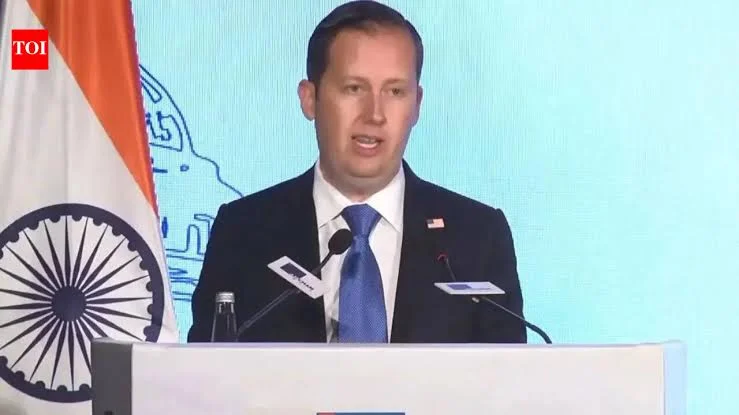
The proposed India-US trade deal is nearing a breakthrough, with US Ambassador Sergio Gor expressing confidence that both countries will finalise an agreement. Speaking in an exclusive interview with NDTV on October 15, 2026, Gor said the negotiations were progressing towards completion, although the pact required further work following a US Supreme Court ruling that affected the American tariff framework.
His remarks came as India's Commerce Minister Piyush Goyal confirmed that the first tranche of the bilateral trade agreement was undergoing legal drafting. The latest developments have raised expectations of progress in trade relations between the two countries, with both sides seeking greater market access and a more competitive trading arrangement.
Sergio Gor Says India-US Trade Deal Is Close to Completion
Gor described the negotiations as being close to their final stage and said he was confident that an agreement would eventually be reached.
According to the US ambassador, both countries have a strong interest in concluding the deal, which he characterised as a potential win-win arrangement for India and the United States.
However, he also acknowledged that the negotiations involve several complex issues. When asked why an agreement described as nearly complete months earlier had not yet been finalised, Gor pointed to the need to revisit parts of the arrangement after a US Supreme Court judgment.
He also referred to External Affairs Minister S. Jaishankar's recent comments suggesting that the negotiations were approaching a possible conclusion.
The statements indicate continued diplomatic engagement, although a final agreement and its implementation will depend on the completion of negotiations and legal procedures.
Piyush Goyal Confirms Legal Drafting of the First Trade Deal Tranche
India's Commerce Minister Piyush Goyal said the first tranche of the India-US bilateral trade agreement had been finalised at the negotiating level and was moving through the legal drafting process.
He indicated that the government wanted to operationalise the arrangement once India could secure a competitive position relative to other countries exporting to the US market.
This consideration is important because Indian exporters compete with businesses from several economies for access to American consumers. More favourable tariff terms could improve the competitiveness of Indian products, depending on the sectors covered and the final conditions.
The first tranche is therefore an important step in the wider negotiations. However, the legal drafting process should not be confused with the formal signing, ratification where applicable, or implementation of the agreement.
Why the US Supreme Court Ruling Matters
One of the factors complicating the negotiations is a US Supreme Court decision affecting tariffs imposed by President Donald Trump under emergency powers.
Gor indicated that the ruling required aspects of the proposed trade arrangement to be reconsidered. Changes to the legal framework governing tariffs can influence how trade commitments are structured and implemented.
The development highlights the challenge of negotiating a bilateral agreement when domestic legal decisions can alter the policy environment.
India and the United States have been negotiating the proposed pact since early 2025. Their discussions aim to address tariff-related disputes, reduce non-tariff barriers and improve access to each other's markets.
For India, a central objective is to secure tariff treatment that allows its exporters to compete effectively against suppliers from other countries.
India and US Aim to Expand Bilateral Trade to $500 Billion
Gor said bilateral trade between India and the United States had increased substantially over the past two decades, surpassing $250 billion, according to the figures he cited in the interview.
He also highlighted an ambitious target set by President Donald Trump and Prime Minister Narendra Modi: increasing bilateral trade to $500 billion within the next three years.
Achieving this target would require continued expansion in trade across several industries, alongside greater investment and improved market access.
Gor identified pharmaceuticals and information technology as important areas of cooperation. He also pointed to investment flows in both directions, including investment by American technology companies in India and Indian businesses in the United States.
A comprehensive trade agreement could help strengthen these commercial relationships by providing greater clarity on tariffs and market access. The extent of its impact, however, will depend on the terms ultimately agreed upon by both governments.
India-US Relations Face Trade and Immigration Challenges
Despite the positive tone surrounding the trade negotiations, India-US relations have faced several challenges.
Tariff measures introduced by Washington have created friction, while disagreements over other policy issues have added complexity to the bilateral relationship.
Gor's interview also comes amid concerns involving US immigration policies, including higher H-1B visa fees and restrictions affecting certain immigration and employment pathways used by Indian professionals and technology companies.
These issues matter because the economic relationship extends beyond merchandise trade. Indian IT companies, skilled professionals, investors and multinational businesses all have a stake in the broader policy environment governing movement, investment and commercial activity.
Progress on the trade agreement could provide a positive signal, but it would not automatically resolve every disagreement between the two countries.
US Ambassador Highlights Defence Cooperation and F-35 Aircraft
The interview also addressed defence ties, particularly whether the advanced F-35 fighter aircraft could be offered to India.
Gor said questions concerning a potential F-35 offer should be directed to the US Department of Defense. He did not confirm a sale or a formal offer to India.
However, he emphasised the depth of military cooperation between the two countries, including joint exercises and high-level defence engagement.
Gor noted that US F-35 aircraft had participated in activities in India during a recent period of military cooperation. He described the deployment as an indication of the trust between the two countries.
While such cooperation demonstrates closer defence engagement, it should not be interpreted as confirmation that India will acquire the aircraft. Any potential purchase would require separate discussions and formal decisions by the relevant authorities.
US Attorney General Expected to Visit India in November
Gor also announced that the US Attorney General was expected to visit India in November for a counter-narcotics conference. He described the visit as nearly confirmed at the time of the interview.
The proposed engagement is intended to strengthen cooperation between the two countries in tackling illegal narcotics and related criminal activities.
According to Gor, both governments recognise the harm caused by illegal substances and have a shared interest in improving coordination on the issue.
The ambassador also said US Secretary of State Marco Rubio was expected to meet External Affairs Minister S. Jaishankar in Mumbai during his upcoming visit. He added that Rubio would meet other Indian government representatives and travel to Jamnagar.
These engagements point to a broader bilateral agenda that includes trade, defence, law enforcement and diplomatic cooperation.
What the India-US Trade Deal Could Mean for Businesses
A completed trade agreement could influence Indian exporters, American businesses and companies operating across both markets. Its practical impact would depend on the final tariff schedules, product coverage and commitments made by the two countries.
For Indian exporters, improved access to the US market could create opportunities in sectors such as pharmaceuticals, manufacturing and other internationally traded goods. American businesses could also benefit from clearer rules and improved access to Indian markets.
At the same time, businesses will need to assess the agreement's final provisions before making decisions about pricing, sourcing, production or investment.
The proposed $500 billion trade target reflects the ambition to expand commercial ties, but achieving it will require more than an announcement. Sustained demand, investment, competitive pricing and predictable trade policies will all play important roles.
Conclusion: India-US Trade Negotiations Enter a Crucial Phase
The latest statements from Sergio Gor and Piyush Goyal suggest that the India-US trade deal has made progress, with the first tranche reportedly moving through legal drafting and the broader negotiations approaching a potential conclusion.
Nevertheless, the need to address the implications of the US Supreme Court ruling shows that important details remain to be resolved. The agreement's final terms will determine how much it changes market access and the competitive position of businesses in both countries.
With bilateral trade already exceeding $250 billion, the proposed target of $500 billion over the next three years adds further significance to the negotiations. The next major milestones will be the completion of the legal process, an official announcement of the agreement and clarity on when its provisions will take effect.
Sources By Agencies

Startup Tribune Team is the editorial team behind Startup Tribune, covering startups, business, entrepreneurship, technology, funding and innovation. The team publishes news, company updates and industry insights to keep readers informed about the latest business developments through clear, relevant and responsibly sourced content.





Comments (0)