

Rekise Marine Raises $9.7 Million in Seed Funding Led by Accel and Nikhil Kamath’s NKSquared
Indian marine robotics startup Rekise Marine has secured $9.7 million (approximately ₹92 crore) in seed funding to accelerate the development of autonomous naval platforms, including unmanned surface vessels and underwater vehicles. The funding round was led by venture capital firm Accel and NKSquared, the investment firm founded by entrepreneur and Zerodha co-founder Nikhil Kamath.

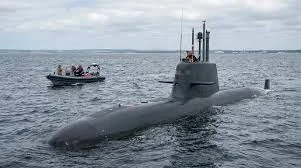
Indian Marine Robotics Startup Plans to Accelerate Development of Autonomous Naval Vessels and Underwater Systems
Bengaluru: Indian marine robotics startup Rekise Marine has secured $9.7 million (approximately ₹92 crore) in seed funding to accelerate the development of autonomous naval platforms, including unmanned surface vessels and underwater vehicles. The funding round was led by venture capital firm Accel and NKSquared, the investment firm founded by entrepreneur and Zerodha co-founder Nikhil Kamath.
The investment marks a significant milestone for India's growing defence technology and maritime innovation ecosystem, as Rekise Marine aims to build next-generation autonomous vessels for commercial and strategic applications.
Strong Investor Backing for Marine Technology Innovation
Apart from Accel and NKSquared, the funding round attracted participation from several prominent investors, including Sameer Brij Verma, Sandeep Singhal, Industrial47, Singularity AMC, multiple corporate leaders, family offices, and the company’s founders.
The fresh capital is expected to help Rekise Marine strengthen its position in the rapidly evolving autonomous maritime technology sector.
Building India's Autonomous Naval Fleet
Founded by naval architect Maitrai Maka, Rekise Marine was established with the vision that autonomous technologies will fundamentally transform maritime operations in the coming decades.
The company develops a wide range of autonomous maritime systems, including:
- Autonomous surface vessels (ASVs)
- Autonomous underwater vehicles (AUVs)
- Unmanned naval platforms
- Maritime autonomy software
- Advanced robotics and navigation systems
Rekise follows a full-stack development approach, designing vessels, integrating hardware systems, and developing autonomy software entirely in-house.
Proprietary Software Powers Multiple Vessel Categories
One of Rekise Marine’s key strengths is its scalable software platform, which enables autonomous operations across different classes of vessels.
The technology can be deployed on:
- Small portable autonomous systems
- Medium-sized survey vessels
- Large autonomous ships
- Extra-large underwater submarines
This flexibility allows the company to rapidly adapt and deploy autonomous capabilities across multiple maritime applications with minimal system modifications.
Collaboration with Leading Indian Shipyards
Rekise Marine manufactures and integrates its autonomous vessels in partnership with some of India's leading defence and shipbuilding organizations, including:
- Goa Shipyard Limited (GSL)
- Garden Reach Shipbuilders & Engineers (GRSE)
These collaborations strengthen the company's ability to develop advanced indigenous maritime technologies while supporting India's defence manufacturing ambitions.
Key Autonomous Platforms in Rekise Marine's Portfolio
The company has already developed a growing portfolio of autonomous maritime platforms designed for surface and underwater operations.
Jaldoot
An autonomous surface vessel that has already been delivered to customers and is operational.
Swadheen
An autonomous survey vessel that has successfully completed fully autonomous open-sea trials.
Autonomous Underwater Vehicle (AUV)
A man-portable underwater vehicle currently undergoing testing and development in collaboration with Indian shipyards.
Jalkapi
The company's flagship platform, Jalkapi, represents its most advanced autonomous vessel currently under development.
Key specifications include:
- Length: Approximately 11 meters
- Weight: Around 20 tonnes
- Endurance: Up to 45 days at sea
- Designed for long-duration autonomous missions
Funding to Support Expansion and Product Development
The newly raised capital will primarily be used to:
- Complete development and sea trials of Jalkapi
- Advance proprietary autonomy software
- Expand engineering and research capabilities
- Accelerate AI and machine learning integration
- Strengthen robotics and embedded systems development
- Scale operational testing and deployment activities
The company also plans to significantly grow its workforce by hiring specialists across multiple disciplines.
Hiring Across Advanced Technology Roles
As part of its expansion strategy, Rekise Marine is actively recruiting talent in:
- Robotics engineering
- Artificial Intelligence (AI)
- Machine Learning (ML)
- Embedded systems
- Naval architecture
- Autonomy software development
- Platform integration
- Maritime operations
The company believes attracting top engineering talent will be critical to achieving its long-term vision of creating globally competitive autonomous maritime technologies.
India's Defence-Tech and Maritime Innovation Sector Gains Momentum
The investment in Rekise Marine reflects increasing investor confidence in India's defence-tech, robotics, and autonomous systems sectors.
With growing emphasis on indigenous defence manufacturing, maritime security, and autonomous technologies, startups operating at the intersection of AI, robotics, and defence are attracting significant attention from investors.
As governments and industries worldwide seek advanced autonomous maritime solutions, Rekise Marine aims to position itself as a leading innovator in autonomous naval platforms developed in India.
The successful funding round not only strengthens Rekise Marine's growth plans but also highlights the rising importance of homegrown technology companies in shaping the future of maritime and defence innovation.
(With inputs from agencies)







Comments (0)