

Scientists Discover Massive Fan-Shaped Structure Hidden Beneath Antarctica’s Ice Sheet
Scientists have uncovered a massive fan-shaped geological structure buried deep beneath the East Antarctic Ice Sheet, a discovery that could transform our understanding of Antarctica’s geological history and help researchers assess the future stability of ice regions vulnerable to climate change.

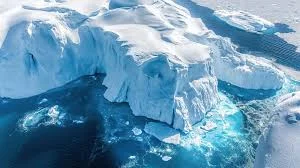
Ancient Geological Formation Beneath East Antarctica Could Offer New Insights Into Climate Change and Ice Sheet Stability
Antarctica: Scientists have uncovered a massive fan-shaped geological structure buried deep beneath the East Antarctic Ice Sheet, a discovery that could transform our understanding of Antarctica’s geological history and help researchers assess the future stability of ice regions vulnerable to climate change.
The newly identified formation, hidden beneath layers of ice more than three kilometers thick in some locations, reveals a complex network of ancient basins and subglacial features that have remained concealed for millions of years.
Researchers believe the discovery could provide critical clues about how Antarctica evolved over geological time and how its ice sheets may respond to a warming climate.
Hidden Structure Lies Beneath East Antarctic Ice Sheet
The newly discovered formation has been named the East Antarctic Fan-Shaped Basin Province by the international team of geoscientists who conducted the study.
The vast underground structure consists of interconnected basins stretching beneath one of the most remote and least explored regions on Earth.
Among the key features included within the formation are:
- The Wilkes Basin
- The Aurora Basin
- The basin containing Lake Vostok
- Several other previously mapped subglacial depressions
Lake Vostok, located within the structure, is particularly significant as it is recognized as the largest known subglacial lake on the planet.
The discovery highlights the remarkable geological complexity hidden beneath Antarctica's vast ice cover.
Researchers Reveal Clues to Antarctica’s Ancient Past
The study was led by Dr. Egidio Armadillo from the University of Genoa and supported by the Italian National Antarctic Research Program.
Scientists believe the fan-shaped basin system formed through a process known as distributed rotational extension, where continental crust gradually stretches outward around a central region.
According to researchers, the structure may represent one of the largest examples of rotational crustal extension ever identified within a continental landmass.
The findings suggest that the geological formation may be linked to tectonic activity associated with the ancient supercontinent Gondwana, which once connected Antarctica with Australia, Africa, South America, and India.
Connection to the Breakup of Gondwana
Geologists believe the hidden basin province could preserve evidence from the dramatic breakup of Gondwana hundreds of millions of years ago.
As tectonic plates shifted and continents slowly drifted apart, large-scale crustal deformation may have created the fan-shaped pattern now identified beneath Antarctica.
Researchers suggest the structure may also provide valuable information about the geological separation of Antarctica and Australia, one of the most significant events in Earth's tectonic history.
Understanding these ancient processes helps scientists reconstruct the continent's evolution over millions of years.
Why the Discovery Matters for Climate Change Research
Beyond its geological importance, the discovery could play a key role in understanding the future behavior of Antarctica's ice sheets.
Scientists explain that the shape and characteristics of bedrock beneath the ice directly influence how glaciers and ice masses move across the continent.
The newly identified basin network may help researchers better understand:
- Ice sheet movement
- Glacier stability
- Subglacial lake formation
- Ice loss patterns
- Vulnerability to climate change
Some regions of the East Antarctic Ice Sheet are considered particularly sensitive to rising global temperatures, making detailed knowledge of the underlying landscape increasingly important.
Antarctica’s Largest Ice Mass Under the Spotlight
The East Antarctic Ice Sheet is the largest ice mass on Earth and contains the geographic South Pole.
It forms one of the three major sections of Antarctica alongside:
- West Antarctica
- The Antarctic Peninsula
- East Antarctica
Because the East Antarctic Ice Sheet stores enormous volumes of frozen water, any significant changes in its stability could have major implications for global sea levels.
Scientists are therefore working to better understand the geological structures hidden beneath the ice and their influence on long-term ice sheet behavior.
Advanced Technology Helped Reveal the Hidden Formation
The discovery was made possible through the use of multiple advanced scientific techniques and datasets.
Researchers combined information from:
- Subglacial topography mapping
- Gravity measurements
- Magnetic field data
- Seismic surveys
- Lithospheric modeling
- Ice-sheet reconstruction analysis
These methods allowed scientists to create one of the most detailed pictures yet of the landscape buried beneath Antarctica's thick ice cover.
Reconstructing Antarctica Without Ice
A crucial aspect of the study involved estimating how East Antarctica would appear if its ice sheet were completely removed.
Researchers calculated how the land would rebound upward after the removal of the enormous weight of ice, in some areas by as much as one kilometer.
This reconstructed "rebounded landscape" enabled scientists to identify the orientation, elevation, and extent of the fan-shaped basin system with greater accuracy.
The technique provided new insights into geological features that would otherwise remain hidden beneath the continent's frozen surface.
A Breakthrough for Antarctic Science
The discovery of the East Antarctic Fan-Shaped Basin Province represents one of the most significant recent findings in Antarctic geology.
By revealing a massive hidden structure beneath Earth's largest ice sheet, researchers have gained valuable new information about the continent's formation, tectonic history, and potential response to future climate change.
As scientific exploration of Antarctica continues, discoveries like this are expected to improve our understanding of how the frozen continent influences global climate systems and sea-level changes.
The findings also demonstrate how advanced geophysical technologies are helping scientists uncover secrets buried deep beneath some of the planet's most inaccessible regions.
(With inputs from agencies)






Comments (0)