

India Likely to Attract More Memory Chip Investments as Demand Surges: Ashwini Vaishnaw
India is poised to attract significant new investments in the semiconductor sector, particularly in memory chip manufacturing, as global demand for advanced data storage and AI-related components continues to outpace supply, Union Electronics and Information Technology Minister Ashwini Vaishnaw has said.

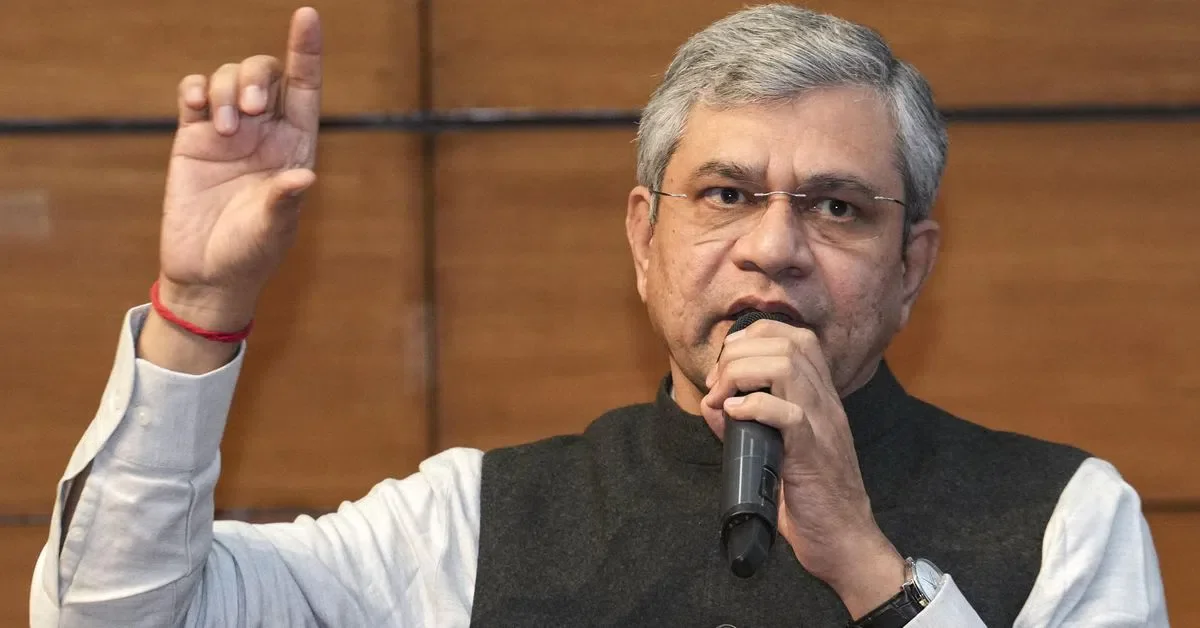
Union Minister Says New Semiconductor Players and Existing Manufacturers May Expand Operations in India
New Delhi: India is poised to attract significant new investments in the semiconductor sector, particularly in memory chip manufacturing, as global demand for advanced data storage and AI-related components continues to outpace supply, Union Electronics and Information Technology Minister Ashwini Vaishnaw has said.
The minister indicated that both new companies and existing semiconductor manufacturers are likely to expand their presence in India to address the growing global shortage of memory chips, which are increasingly critical for artificial intelligence (AI), cloud computing, and data centre infrastructure.
Rising Demand for Memory Chips Fuels Investment Opportunities
Global demand for memory chips has surged due to the rapid expansion of AI technologies, high-performance computing systems, and large-scale data centres. The resulting supply-demand imbalance has led to higher memory chip prices and increased production costs for electronic devices such as smartphones, laptops, servers, and networking equipment.
Speaking about the trend, Vaishnaw said the semiconductor industry is witnessing an unprecedented shortage of key components, especially high-bandwidth memory (HBM) chips that are essential for AI-powered data centres.
"For the first time, the semiconductor industry is experiencing such a significant shortage of components required for AI data centres and advanced computing applications," the minister noted.
India Emerging as a Global Semiconductor Manufacturing Hub
The minister highlighted that India has begun seeing tangible results from its semiconductor manufacturing initiatives under the India Semiconductor Mission (ISM).
He pointed to the commencement of commercial production at new memory manufacturing facilities, including projects involving global semiconductor giant Micron, as evidence that efforts to strengthen domestic chip production are gaining momentum.
According to Vaishnaw, India is becoming an increasingly attractive destination for semiconductor investments as companies seek to diversify supply chains and expand production capacity.
When asked whether future growth would come from existing manufacturers or new entrants, the minister responded that both possibilities appear likely.
Data Centre Boom Driving Demand for Storage Capacity
India's rapidly growing digital economy is creating substantial demand for data storage infrastructure.
Industry estimates suggest that investments in India's data centre ecosystem could soon exceed USD 200 billion, generating demand for billions of gigabytes of memory and storage capacity.
The expansion of AI applications, cloud services, digital payments, e-commerce platforms, and enterprise computing is expected to further increase demand for advanced semiconductor products.
India Semiconductor Mission 2.0 to Prioritise Chip Design
Vaishnaw revealed that work on India Semiconductor Mission (ISM) 2.0 is already at an advanced stage.
The next phase of the government's semiconductor strategy will focus heavily on:
- Semiconductor chip design
- Equipment manufacturing
- Research and development
- Indigenous technology innovation
- Advanced semiconductor packaging
The minister said India aims to strengthen its position not only as a manufacturing destination but also as a global centre for semiconductor design and engineering.
Focus on Semiconductor Equipment Manufacturing
In addition to chip fabrication, the government plans to encourage international equipment manufacturers to establish design and manufacturing operations in India.
Semiconductor manufacturing relies on highly sophisticated equipment, and building domestic capabilities in this area is viewed as a strategic priority.
Vaishnaw said India will actively pursue opportunities to attract global equipment makers while supporting domestic innovation in semiconductor production technologies.
Indigenous Production of Critical Materials
The government is also exploring ways to boost local manufacturing of specialized chemicals and industrial gases required for semiconductor fabrication.
Reducing dependence on imports for critical materials is expected to strengthen India's semiconductor supply chain and improve long-term industry resilience.
The minister added that the country will continue to support the development of additional semiconductor fabrication plants (fabs) and Assembly, Testing, Marking and Packaging (ATMP) facilities in the coming years.
India's Talent Pool Attracting Global Technology Investments
Vaishnaw emphasized that India's large and highly skilled workforce remains one of the biggest factors attracting global technology and semiconductor companies.
He noted that India's engineering talent, combined with growing expertise in electronics, software, AI, and semiconductor design, gives the country a competitive advantage in the global technology landscape.
Robust Infrastructure Supporting Data Centre Growth
The minister also highlighted India's rapidly modernizing infrastructure as a key attraction for data centre operators and hyperscale technology companies.
According to Vaishnaw, several factors make India an attractive destination for large-scale data centre investments:
- A modern and expanding power grid
- More than 200,000 kilometres of transmission infrastructure added over the past decade
- High availability of renewable energy
- Strong digital connectivity
- Expanding cloud and technology ecosystem
He noted that nearly half of India's power generation capacity now comes from renewable energy sources, supporting sustainability goals for energy-intensive data centres.
Addressing Environmental Concerns
As data centre investments continue to grow, concerns regarding electricity and water consumption have also increased globally.
Vaishnaw said India is adopting stringent environmental standards and encouraging innovative technologies that reduce resource usage.
Advanced cooling systems and water-efficient technologies are already being deployed to significantly reduce water consumption in modern data centres.
Industry studies estimate that data centre water usage in India could rise substantially over the coming years, making sustainability-focused innovation increasingly important.
India's Semiconductor Ambitions Gain Momentum
With rising global demand for AI infrastructure, memory chips, and advanced semiconductor technologies, India is positioning itself as a major player in the global semiconductor ecosystem.
Government-backed initiatives, growing investor interest, expanding infrastructure, and a strong talent base are expected to accelerate the country's semiconductor manufacturing ambitions.
As memory chip shortages persist worldwide, India could emerge as a key destination for new investments, helping strengthen global supply chains while boosting domestic technological capabilities and economic growth.
(With inputs from agencies)









Comments (0)