Government Removes BAT-BMS, Lossigy and Epoch-i-ion Apps After Reports of Remote E-Rickshaw Disabling

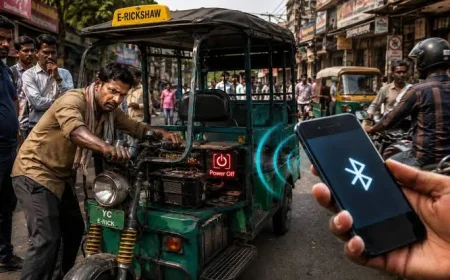
The Indian government has directed the removal of three smartphone applications—BAT-BMS, Lossigy, and Epoch-i-ion—from app stores after reports emerged that they were allegedly being misused to remotely disable battery-operated vehicles, including e-rickshaws. The action follows the circulation of viral videos demonstrating how the apps could connect to electric vehicle battery systems via Bluetooth and switch off power remotely.

Admin Admin Editorial
Jul 04, 2026 - 13:21
0 0
Government Removes BAT-BMS, Lossigy and Epoch-i-ion Apps After Reports of Remote E-Rickshaw Disabling

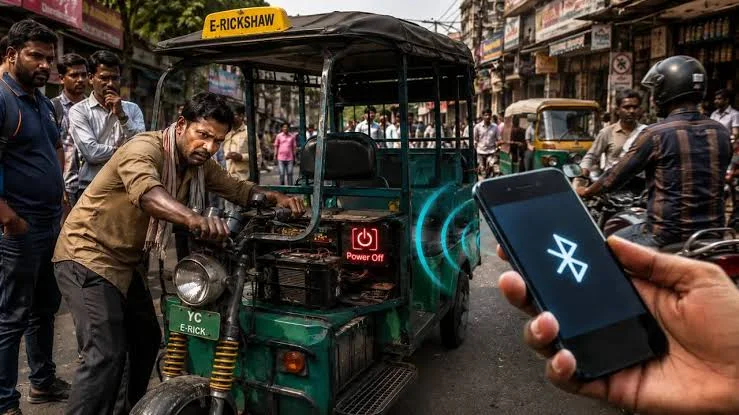
The Indian government has directed the removal of three smartphone applications—BAT-BMS, Lossigy, and Epoch-i-ion—from app stores after reports emerged that they were allegedly being misused to remotely disable battery-operated vehicles, including e-rickshaws. The action follows the circulation of viral videos demonstrating how the apps could connect to electric vehicle battery systems via Bluetooth and switch off power remotely.
The move comes amid growing concerns over cybersecurity vulnerabilities in battery management systems (BMS) used in electric vehicles, particularly low-cost e-rickshaws operating across India.

Government Confirms Removal of Apps

Speaking at a cybersecurity summit, IT Secretary S. Krishnan confirmed that the government had acted swiftly after becoming aware of the issue.

According to the official, the applications came to the government's attention after reports surfaced, and directions were issued to remove them from app stores. Authorities later identified the affected applications as BAT-BMS, Lossigy, and Epoch-i-ion.

The government is also expected to continue monitoring similar applications that could pose cybersecurity or public safety risks.

Viral Videos Raise Security Concerns

The issue gained national attention after multiple videos circulated on social media showing e-rickshaws being remotely disabled while in operation. In several clips, users appeared to connect to nearby battery systems through Bluetooth and deactivate the battery discharge function, causing vehicles to stop unexpectedly.

The incidents raised concerns over the safety and reliability of electric vehicles, particularly those used for public transport and last-mile connectivity.

How the Apps Allegedly Worked

According to preliminary findings, the applications were originally developed to help users monitor and manage lithium battery systems. They provide information such as:

  • Battery voltage
  • Temperature
  • Charging and discharging status
  • Current flow
  • Overall battery health

However, officials believe the remote-control features of these apps were allegedly exploited to connect with unsecured Battery Management Systems (BMS) installed in some electric vehicles, allowing unauthorized users within Bluetooth range to disable battery output.

Security Weakness Found in Some E-Rickshaws

Officials investigating the issue have pointed to security shortcomings in certain budget-friendly e-rickshaws sold in India.

Many of these vehicles reportedly use Chinese-manufactured Battery Management Systems (BMS) that lack essential cybersecurity protections, including password authentication and secure Bluetooth pairing. As a result, nearby devices could allegedly establish unauthorized Bluetooth connections and interfere with battery functions.

One of the applications, BAT-BMS, developed by Shenzhen Grenergy Technology, is intended as a battery management tool for compatible lithium batteries. While its legitimate purpose is to monitor battery performance, authorities believe its remote-control capabilities were misused where battery systems lacked adequate security safeguards.

Impact on Drivers and Passengers

The reported remote disabling of e-rickshaws has caused inconvenience for drivers and passengers, particularly in cities where battery-operated vehicles serve as a key mode of short-distance transportation.

Unexpected shutdowns not only disrupted daily operations but also raised concerns about passenger safety, driver livelihoods, and the cybersecurity standards of electric vehicle components.

Government Focuses on EV Cybersecurity

The government's decision to remove the applications is being viewed as a precautionary measure aimed at preventing further misuse while authorities examine the broader security vulnerabilities in battery-operated vehicles.

Experts believe the incident highlights the need for stronger cybersecurity standards in electric mobility, including secure Battery Management Systems, encrypted Bluetooth communication, mandatory authentication mechanisms, and regular software updates to prevent unauthorized access.

As India's electric vehicle ecosystem continues to expand, strengthening digital security alongside physical safety is expected to become a key priority for manufacturers, battery suppliers, and regulators alike.

Agency Inputs

Comments (0)

User