

Trump Claims Russia-Ukraine Energy Ceasefire Is in Place Amid Reports of Fresh Russian Strike
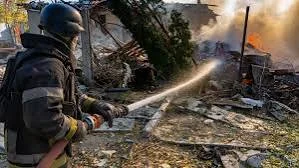
US President Donald Trump has maintained that Russia and Ukraine have agreed to suspend attacks on each other's energy infrastructure. However, the announcement has come under scrutiny after Ukrainian officials reported fresh Russian strikes on energy facilities, raising questions about whether a ceasefire is actually being observed.
Speaking to reporters on Monday, Trump said Russian President Vladimir Putin and Ukrainian President Volodymyr Zelenskyy had accepted his proposal to halt attacks on energy infrastructure. He suggested that his intervention had secured their agreement, although the precise terms and implementation of the arrangement remained unclear.
When asked about reports of continued attacks, Trump acknowledged that violations could have occurred on both sides. He said the situation would need further examination before drawing conclusions.
The conflicting statements have added uncertainty to diplomatic efforts aimed at reducing hostilities in the war, which began with Russia's full-scale invasion of Ukraine in February 2022.
Ukraine Reports Fresh Attacks on Energy Infrastructure
Ukrainian President Volodymyr Zelenskyy said Russian forces had targeted six energy facilities in Ukraine on Monday, despite Trump's announcement of the proposed truce. According to Zelenskyy, the attacks were accompanied by casualties, with 33 people reported wounded across the country.
Kyiv has expressed support for an arrangement that would protect energy infrastructure from military attacks. Zelenskyy also indicated that Ukraine was prepared to formalise commitments intended to make such an agreement more reliable.
However, the Ukrainian president questioned Moscow's willingness to honour the proposed understanding. He argued that continued attacks demonstrated the need for concrete commitments rather than announcements alone.
Energy facilities are particularly important during wartime because damage to power generation, fuel supplies and distribution networks can disrupt essential services, affect households and businesses, and complicate the country's economic recovery.
For Ukraine, an effective energy ceasefire could help protect critical infrastructure and reduce the impact of military operations on civilians.
Russia Signals No Immediate Halt to Its Military Campaign
Moscow has offered little indication that it is prepared to suspend its broader military operations. Russian Foreign Minister Sergey Lavrov reiterated that Russia would continue pursuing the objectives it describes as its special military operation.
His remarks cast further doubt on the scope of the proposed energy truce and whether it represents a mutually accepted commitment or an announcement that still requires formal negotiations.
The difference between the positions expressed by Washington, Kyiv and Moscow highlights a central challenge in the diplomatic process: securing an agreement is only the first step, while establishing clear conditions and ensuring compliance are equally important.
Without a mutually understood framework, disagreements over what constitutes a violation could undermine efforts to reduce attacks.
Trump's Russian Diesel Decision Draws Criticism
The energy ceasefire announcement followed a separate US decision to temporarily ease sanctions affecting Russian diesel supplies. The move has attracted criticism from Ukrainian officials and European allies, who argue that relaxing economic restrictions could weaken efforts to limit Russia's financial resources.
Zelenskyy has warned that easing restrictions could benefit Moscow economically while its military campaign continues. Critics have also questioned whether the decision is consistent with existing US sanctions legislation.
The controversy reflects a broader debate over how Washington should balance energy affordability, economic interests and its approach to the war in Ukraine.
Energy prices have become an important political issue in the United States, where increases in fuel and living costs have put pressure on households. Changes to restrictions affecting Russian energy products could influence market conditions, although the actual impact would depend on supply, demand and wider geopolitical developments.
The decision has therefore become part of a larger discussion about whether economic concessions can encourage diplomatic progress or risk weakening pressure on Moscow.
US Midterm Elections Add Political Pressure
The latest diplomatic developments are unfolding ahead of the US midterm elections scheduled for November 3, 2026. Domestic concerns over fuel prices and the cost of living have become significant political issues for the Trump administration.
Trump has repeatedly called for an end to the war and has portrayed Zelenskyy as a key obstacle to reaching a settlement. He has also suggested that Putin is more willing to negotiate, a position that has drawn criticism from supporters of Ukraine.
However, uncertainty surrounding the reported energy agreement raises questions about whether Washington has secured a concrete commitment from both governments.
Al Jazeera correspondent Alan Fisher noted that Trump has previously announced understandings between Russia and Ukraine that did not ultimately translate into lasting agreements.
The timing of the latest announcement has consequently attracted attention, particularly as the administration faces pressure to demonstrate progress on foreign policy while addressing domestic economic concerns.
Nevertheless, the relationship between energy policy, diplomatic negotiations and electoral politics remains complex. A temporary change in sanctions policy or a public declaration of a truce does not, by itself, establish that hostilities will decline.
European Union Maintains Pressure on Moscow
European leaders have responded cautiously to the reported ceasefire, continuing to emphasise the importance of economic pressure on Russia.
European Union foreign ministers approved a new sanctions package that added approximately 1,569 individuals and businesses to the bloc's sanctions list, according to the reported announcement. The measures were presented as part of Europe's continuing effort to restrict support for Russia's war effort.
German Chancellor Friedrich Merz defended the approach, arguing that Moscow would be more likely to engage seriously in negotiations if it continued to face sustained pressure.
The European position highlights a difference in emphasis between diplomatic efforts centred on reaching an immediate understanding and strategies that prioritise maintaining economic restrictions until Russia demonstrates a willingness to negotiate.
For Ukraine's European partners, the credibility of any ceasefire will depend not only on public statements but also on whether military activity changes on the ground.
What the Energy Ceasefire Could Mean for Russia and Ukraine
A genuine halt to attacks on energy infrastructure could represent a limited but meaningful step towards reducing the consequences of the conflict.
Power plants, electricity networks, refineries and other energy assets are essential to civilian life and economic activity. Protecting them could reduce disruption to essential services, improve energy security and create space for further diplomatic discussions.
However, several questions remain unresolved. These include the exact terms of the proposed arrangement, whether both governments have formally accepted the same conditions, how alleged violations would be verified, and what measures would follow if either side failed to comply.
The reports of fresh attacks cited by Ukrainian officials also underline the difficulty of translating political announcements into changes on the battlefield. Independent verification and clear communication between the parties would be important in determining whether the proposed truce is functioning.
For now, the conflicting accounts from Washington, Kyiv and Moscow suggest that the status of the arrangement remains uncertain.
Conclusion
Trump's claim that Russia and Ukraine have agreed to stop targeting energy infrastructure has renewed attention on diplomatic efforts to limit the damage caused by the war. Yet Ukraine's reports of fresh Russian attacks and Moscow's continued commitment to its military campaign have raised doubts about whether the proposed ceasefire is being implemented.
At the same time, US sanctions decisions, European pressure on Russia and the approaching American midterm elections have added political and economic dimensions to the negotiations.
The immediate test will be whether the reported understanding produces a verifiable reduction in attacks. Until the parties establish clear terms and demonstrate compliance, the prospect of a lasting energy ceasefire remains uncertain.
Sources By Agencies

Startup Tribune Team is the editorial team behind Startup Tribune, covering startups, business, entrepreneurship, technology, funding and innovation. The team publishes news, company updates and industry insights to keep readers informed about the latest business developments through clear, relevant and responsibly sourced content.












Comments (0)