

Orionid Meteor Shower 2026 Peak: Best Time to Watch Halley’s Comet Fragments in India
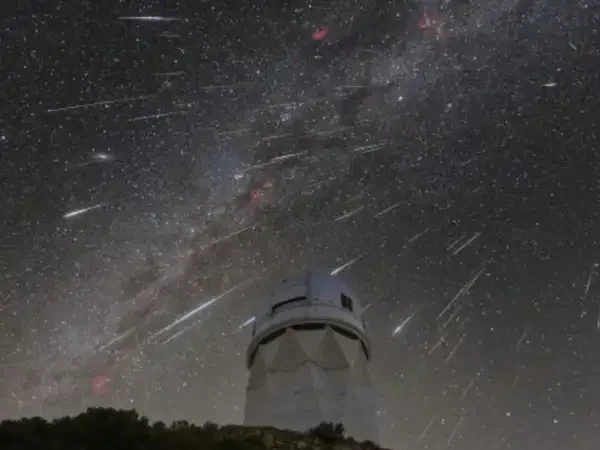
Stargazers have an opportunity to witness one of October’s most anticipated celestial events as the Orionid meteor shower reaches its peak around October 21–22, 2026. The annual display brings fast-moving streaks of light across the night sky, created by tiny particles left behind by the famous Halley’s Comet.
The Orionids are known for their speed and occasional bright fireballs, making them an exciting event for astronomy enthusiasts and casual skywatchers alike. With no telescope or specialist equipment required, observers can watch the display from a suitably dark location, provided weather conditions are favourable.
According to the American Meteor Society, the shower remains active from October 2 to November 7, with its peak expected around October 21–22. Forecasts suggest that viewers could see approximately 10–20 meteors per hour under favourable conditions, although the actual number will depend on the viewing location, sky darkness and weather.
When Will the Orionid Meteor Shower Peak in 2026?
The predicted peak is around 18:00 UTC on October 21, which corresponds to 11:30 PM Indian Standard Time (IST) on October 21.
For observers in India, the most practical viewing opportunity is likely to be during the late-night hours and before sunrise on October 22. The peak time marks the forecast period of greatest activity, but it does not guarantee that the most meteors will be visible at that exact moment from every location.
The Orionids are active for several weeks, so people who miss the predicted peak may still have opportunities to see meteors on nearby nights.
Orionid meteor shower 2026: Key details
-
Peak period: October 21–22, 2026
-
Predicted peak time: Around 11:30 PM IST on October 21
-
Active period: October 2 to November 7
-
Expected activity: Approximately 10–20 meteors per hour under favourable conditions
-
Best viewing window: After midnight and before dawn
-
Equipment required: None; the shower can be viewed with the naked eye
These figures are forecasts rather than guaranteed results. Local weather, light pollution and moonlight can significantly affect what observers see.
Why Does the Orionid Meteor Shower Happen?
The Orionids occur when Earth passes through a stream of dust and debris released by 1P/Halley, better known as Halley’s Comet.
As the comet travels around the Sun, it leaves behind tiny particles along its orbital path. Every year, Earth crosses part of this debris stream. When the particles enter our atmosphere at extremely high speeds, frictional heating and interactions with atmospheric gases cause them to glow, producing the bright streaks commonly called shooting stars.
Despite their appearance, these streaks are not stars falling from the sky. Most are caused by very small particles burning up high above Earth's surface.
The Orionids are particularly notable because their meteors travel at approximately 66–70 kilometres per second. Their high speed can produce brief, vivid trails, and some larger particles may create exceptionally bright fireballs.
Best Time to Watch the Orionids in India
For skywatchers across India, the hours after midnight and before dawn on October 22 offer a useful window for observing the shower.
The constellation Orion, from which the meteors appear to originate, rises higher in the sky as the night progresses. However, meteors can appear across large portions of the sky, so viewers do not need to stare directly at Orion to spot them.
A bright Moon can make fainter meteors harder to see, particularly when it illuminates the surrounding sky. Choosing a darker location and allowing your eyes to adapt can improve the chances of spotting the brighter streaks.
Cloud cover, haze and city lighting may also reduce visibility. If the sky is overcast, even a strong meteor shower can be difficult to observe.
How to Watch the Orionid Meteor Shower: Five Practical Tips
You do not need expensive equipment or advanced astronomy knowledge to enjoy the Orionids. A few simple preparations can make the experience more rewarding.
1. Find a dark location
Move away from bright streetlights, commercial areas and heavily illuminated buildings. A rooftop, open field or safe countryside location with a clear view of the sky can offer better conditions than a brightly lit urban area.
2. Watch after midnight
Plan to observe during the late-night and pre-dawn hours. The rising position of Orion generally makes the later part of the night more favourable for viewing the shower.
3. Give your eyes time to adjust
Allow around 20–30 minutes for your eyes to adapt to darkness. Avoid looking at bright phone screens or using a torch unnecessarily, as bright light can make faint meteors harder to notice.
4. Skip the telescope
A telescope or binoculars is not necessary. Meteor trails can appear anywhere across the sky, and a wide, unobstructed view with the naked eye is usually the better option.
5. Check the weather and be patient
Look for clear skies before heading outside, and dress comfortably for the temperature. Meteors may appear at irregular intervals, so spending at least 30–60 minutes watching can improve your chances of spotting them.
Choose a safe viewing location, particularly if you plan to observe alone or travel outside the city at night.
Halley’s Comet: The Source Behind the Orionids
Halley’s Comet is one of the best-known comets in astronomy. Officially designated 1P/Halley, it returns to the inner Solar System approximately every 76 years.
Its last appearance near the Sun was in 1986, and its next predicted perihelion—the point in its orbit closest to the Sun—is expected in 2061.
Although the comet itself is not returning in 2026, Earth continues to encounter particles left behind during its previous journeys. The Orionids are one of two annual meteor showers associated with Halley’s Comet. The other is the Eta Aquariid meteor shower, which occurs in May.
Scientists have also considered mission concepts aimed at visiting Halley’s Comet again. Any proposed spacecraft journey would involve complex orbital planning, and a mission targeting a future encounter would depend on its final design, funding and launch schedule.
Can You See the Orionid Meteor Shower From a City?
Yes, but visibility may be limited. Urban light pollution brightens the background sky, making faint meteors difficult to distinguish.
If travelling to a darker location is not possible, look for an open area with the least artificial lighting and avoid directly facing bright buildings or streetlights. You may still spot some of the brighter meteors, although the number visible could be considerably lower than under dark-sky conditions.
Observers in rural areas generally have an advantage because the sky is darker and faint trails are easier to detect. Even there, cloud cover and atmospheric conditions can affect the view.
Final Thoughts
The Orionid meteor shower offers a chance to witness the continuing effects of Halley’s Comet as Earth moves through its trail of ancient debris. With its peak expected around October 21–22, 2026, the shower is a worthwhile event for anyone interested in astronomy or simply looking for a reason to spend time under the night sky.
For viewers in India, the late hours of October 21 and the pre-dawn period of October 22 are worth considering. Find a dark location, check the weather, allow your eyes to adjust and be patient.
You do not need a telescope to enjoy the show. All you need is a clear sky and a little time.
Sources By Agencies

Startup Tribune Team is the editorial team behind Startup Tribune, covering startups, business, entrepreneurship, technology, funding and innovation. The team publishes news, company updates and industry insights to keep readers informed about the latest business developments through clear, relevant and responsibly sourced content.






Comments (0)